
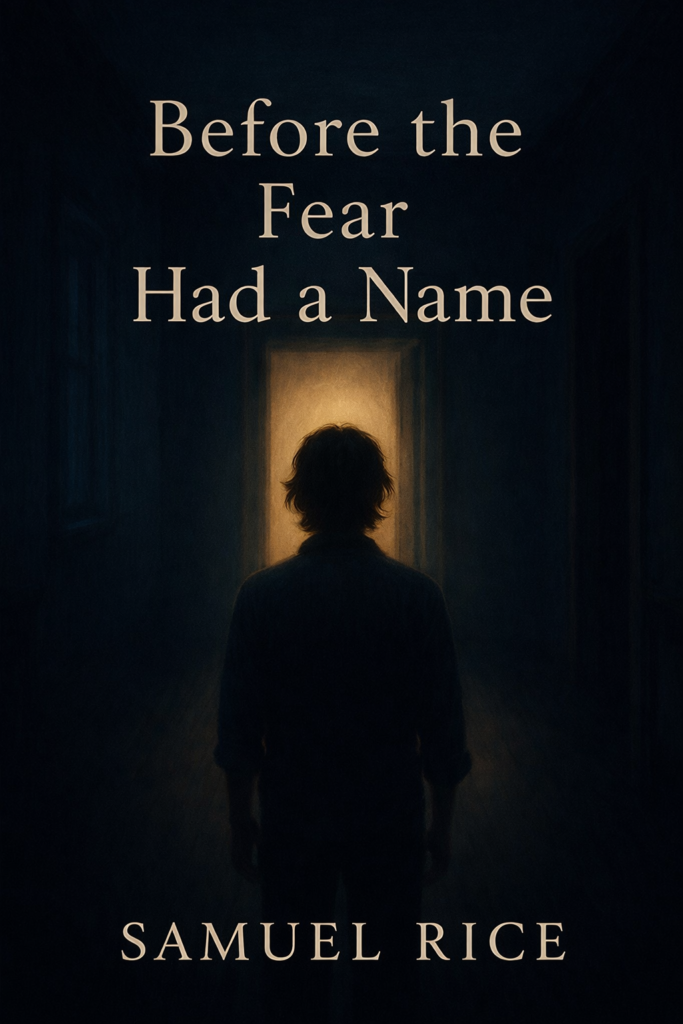
Before the Fear Had a Name
A cinematic novel about stigma, survival, and a love that refuses to disappear.
In 1992, in New York City, Eli Shepherd is chasing a dream that is already slipping through his fingers. When a diagnosis shatters the life he imagined, he is forced to confront the shame, silence, and secrets that have followed him since childhood. What begins as a story about HIV becomes a story about awakening, courage, and what it really means to stay alive.
Deeper Look Into the Story
Before the Fear Had a Name remembers the lives that were silenced, the stories that were never told, and the boys who were never given a chance to become men. It speaks to anyone who has ever felt like a mistake, a burden, or a secret. This is a story for anyone who has stood on the edge and wondered if their life still mattered.
Author’s Notes
When I first began writing Before the Fear Had a Name, I thought it would be about one man’s struggle with a virus, a city, and the shadow of an old love. But somewhere along the way, I realized it was never only about Eli. It became about the voices we don’t hear enough of. The men and women whose names were never spoken at candlelight vigils, the ones who carried their diagnoses in silence because stigma could be more lethal than the illness itself.
Eli’s story, though fictional, is stitched from a tapestry of truths I have known, witnessed, and lived. The fierce love of a mother trying to shield her son from the world’s cruelty, the strange and miraculous intimacy that can bloom in hospital rooms, and the way regret can chain a person to the past until forgiveness finally turns the key.
I lived in the New York area from 1989 to 1995, a time when the city pulsed with both creative brilliance and quiet devastation. The HIV and AIDS crisis was at its height then, an era when fear shadowed every heartbeat, and compassion often had to fight its way through ignorance. My older brother was among those who battled the illness. He died on March 1, 1993. Watching him fade changed me. It revealed the courage hidden inside ordinary people, the small mercies exchanged in whispered hospital rooms, and the way love can stand taller than death itself.
Back then, hope was scarce. The only treatments available were harsh and uncertain. I saw entire communities disappear, young men who looked like shadows of themselves, skin stretched thin over bone, purple lesions marking their bodies. It was a war few outside the front lines ever saw. And yet, amid all that loss, there was light. Lovers who stayed, friends who fought, strangers who marched until their voices went raw. Love did not cure the disease, but it refused to let people die alone.
The AIDS crisis of the 1980s and 1990s was not one single tragedy, it was a constellation of losses, each one its own universe. But from those shattered constellations, something enduring was born: resilience, remembrance, and the unyielding will to love anyway.
If Eli leaves you with anything, let it be this: forgiveness is not surrendering to the wrong done to us. It is reclaiming what is ours. It is laying down the blade we hold to our own throats. It is choosing, even in the face of fear and decay, to love anyway.
Because love, in the end, is the only thing the virus could never touch.